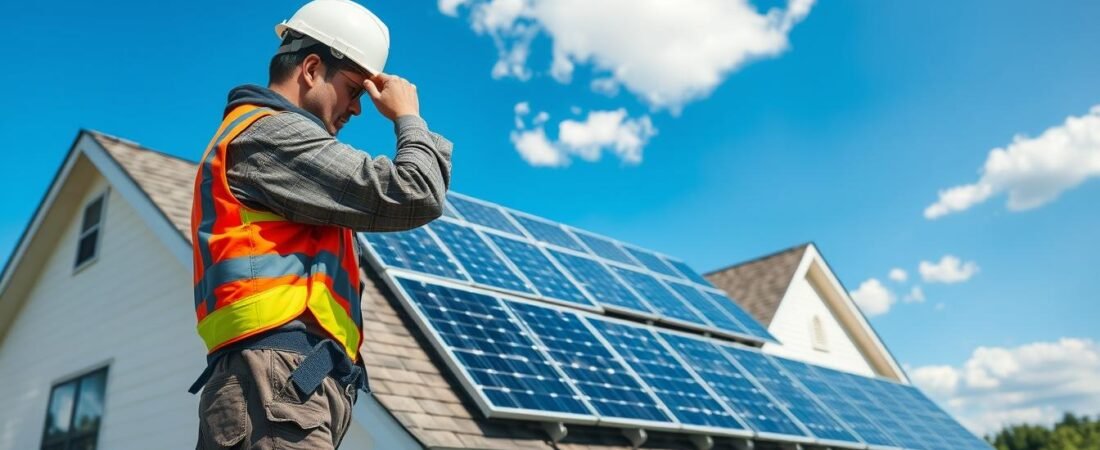
Thinking about cleaner power and lower bills? This guide shows how a local shift to renewable energy can protect your household from rising utility rates and shrinking budgets.
Electricity prices in Illinois climbed 22% from 2020 to 2024, so many homeowners want ways to manage energy costs now. Residents here enjoy about 4.6 peak sun hours per day, which helps a typical system offset roughly 100% of an average home’s usage.
Over 25 years, choosing these upgrades can mean substantial savings. A well-sized setup may save about $61,000 for a typical property. That kind of long-term benefit turns lower monthly bills into a smart investment.
In short: residential solar options are rising across Illinois, with the state ranking 12th for installations. This introduction points you to clear, practical steps so you can decide if this move fits your home and budget.
Key Takeaways: Lower bills, reliable production from 4.6 peak sun hours, potential $61,000 savings over 25 years, and growing statewide adoption.
Why Elgin Homeowners Are Switching to Solar
More residents are choosing to generate their own power to shield household budgets from higher utility rates. Control over monthly costs is the main motivator for many homeowners.
Data shows Illinois electricity prices rose about 20% between 2021 and 2024. Even though local rates sit below the national average, steady increases push families to consider alternatives.
Many homeowners install solar panels to cut dependence on the grid. That shift helps households avoid surprise bills and plan long-term budgets.
“Generating power at home can protect your family from rising utility costs.”
- Reduce monthly electricity spending and risk from future price hikes.
- Gain energy independence and stable long-term savings.
- Turn clean generation into a strategic financial move for the household.
To learn about local options and professional help, explore professional services that guide homeowners through choices and incentives.
Understanding the Benefits of Solar Energy
Choosing clean energy for your home delivers both environmental and financial perks. A short-term change can create lasting gains for families and the neighborhood grid.
Environmental Impact
A 10 kW system can offset about 10 tons of carbon dioxide each year. That is equal to planting roughly 175 trees.
This cut in carbon helps reduce fossil fuel demand. It also lowers regional emissions and supports healthier air for local residents.
“Installing panels on a home directly shrinks your household’s carbon footprint.”
- Offset ~10 tons of carbon annually per 10 kW system.
- Lower local emission rates and ease pressure on utility infrastructure.
- Support clean energy transition while saving on long-term costs.
Energy Independence
Generating your own electricity reduces reliance on the traditional grid. Homeowners gain more control over monthly bills and protection from market swings.
| Benefit | What it means | Typical impact |
|---|---|---|
| Lower emissions | Fewer greenhouse gases released | ~10 tons CO2 saved per 10 kW |
| Grid resilience | Reduced demand on utilities | Less strain during peak use |
| Cost protection | Stable household energy costs | Less exposure to rate hikes |
Professional Elgin Solar Panel Installation Services
Trusted teams bring years of experience and clear project management to every home energy conversion. Source Solar has completed over 500 installations in the region and has served the community for more than ten years.
Turnkey providers like TruHome Pros assign a dedicated project manager to coordinate design, permits, and final checks. This makes the process simple and predictable for homeowners.
Choosing a professional installation company ensures your new system is sized to match household use and roof conditions. Teams perform a full assessment of the roof and energy profile to maximize long-term performance.
- Tailored design: custom layouts to fit your roof and goals.
- Proven track record: over 500 completed projects for local residents.
- Dedicated management: one point of contact to help you get started.
Ready to compare providers? Learn more about our solar panel installation options and the full range of services offered by an experienced installation company.
Financial Incentives and Tax Credits for Illinois Residents
State and federal programs can lower the upfront price of adding a home energy system. These incentives help homeowners plan financing and increase long-term savings.
Property Tax Exemptions
Illinois law exempts 100% of the added home value from property tax when you add a qualifying energy system. File form PTAX-330 to lock in your assessed value and avoid higher property taxes later.
Utility Rebates
Local utilities like ComEd offer rebates that help reduce the initial cost per kW installed. Battery and storage systems may also qualify, boosting your savings and adding backup power during grid outages.
Federal Tax Credits
Homeowners can claim federal tax credits for both the panels and qualifying battery storage. These credits lower tax liability and make the investment more affordable.
Below is a quick comparison of the main incentives and how they help residents decide.
| Incentive | What it covers | Typical benefit |
|---|---|---|
| Property tax exemption | Added home value from energy systems | 0% added tax on assessed value |
| Utility rebates | Per‑kW rebates and storage incentives | $300 per kW (example from ComEd), plus battery rebates |
| Federal tax credit | Panels and eligible battery storage | Percentage credit on qualifying costs (reduces tax owed) |
| Illinois Solar for All | Income‑qualified residential programs | No upfront cost options and expanded access |
Tip: Combine rebates and credits to maximize savings. Our team can help you check eligibility and file the right forms so your investment delivers the best return.
How Solar Systems Perform in Illinois Weather
Seasonal changes influence production, yet today’s technology helps homeowners collect power even on overcast days. Modern solar panels generate electricity from ambient light, so cold or cloudy months still deliver usable output.
Seasonal Efficiency Factors
Cooling and humidity: High humidity can help cool modules. Cooler cells keep efficiency higher during hot summer days.
Winter output: Lower sun angles and shorter days reduce yields, but panels still produce. Snow can reflect light and boost short-term production after a storm.
“Homeowners can rely on steady production across changing weather when systems are well designed and sited.”
- Professional installation positions panels to maximize year-round production.
- Quality equipment keeps performance stable over many years.
- Systems withstand local weather, preserving energy returns for homeowners.
| Factor | Effect on production | What homeowners can expect |
|---|---|---|
| Cloud cover | Reduces peak output | Panels still generate usable electricity |
| High humidity | Cooling improves efficiency | Better summer performance |
| Cold temperatures | Can increase panel efficiency | Solid winter production despite lower sun |
Maximizing Savings with Battery Storage and Virtual Power Plants
Battery storage makes it possible to save daytime production for evening use and grid events.
Adding battery storage to your home lets you store excess energy your panels produce during the day. You can use that electricity at night and during cloudy months to cut utility bills and avoid peak rates.
The Clean and Reliable Grid Affordability Act establishes a Virtual Power Plant (VPP) program launching no later than June 30, 2026. Participants can earn compensation when their battery systems help balance the grid during high demand.
“VPP programs turn home storage into a grid asset and a new income stream for homeowners.”
- Store daytime production for nighttime use and outages.
- Earn performance payments under the VPP for grid support.
- Maximize long‑term savings and protect your investment in clean energy.
| Feature | Benefit | What to expect |
|---|---|---|
| Battery backup | Power during outages | Hours to days of local electricity depending on size |
| VPP participation | Extra payments | Compensation during peak grid events starting by 2026 |
| Smart monitoring | Optimize production and use | Track yearly production, storage levels, and cost savings |
Our team helps you size a system, apply for eligible credit, and set monitoring so your storage delivers reliable savings every year.
Comparing Solar Ownership and Leasing Options
Deciding whether to buy or lease comes down to how you balance upfront cost against long-term value.
Leasing programs like Palmetto’s LightReach offer a Power Purchase Agreement (PPA) so homeowners can access clean energy with no big upfront payment.
Leases start as low as $79 per month, making a system affordable right away. That option removes maintenance worries and lowers first‑year expenses.
Buying gives you full ownership and the greatest lifetime savings. You can claim tax credits and increase home value over time.
“Choosing between ownership and leasing depends on your financial goals and how long you plan to stay in the home.”
- Our installation company helps you compare financing options and long-term returns.
- Both models include professional installation services and warranty support.
- We review costs, expected electricity savings, and service terms so you can pick the best path.
Whether you own or lease, our team guides you through each step so your system delivers reliable performance and savings.
The Impact of Net Metering on Your Investment
Net metering rules now shape how quickly a home energy upgrade pays back its upfront cost.
As of January 1, 2025, new customers receive supply-rate-only credits for excess electricity sent to the grid. That change replaces full retail net metering and affects how you value production from panels and a panel system.
For new installations, pairing your system with battery storage is a smart move.
Storage lets you keep daytime production for peak use and avoid low supply-rate credits from the utility. Batteries also let you tap virtual power programs and earn payments in some months.
If your system was interconnected before 2025, you remain on full retail net metering for the life of that system. That grandfathered status can provide a meaningful tax and long‑term savings advantage.
“Pairing storage with generation maximizes value when supply‑only credits apply.”
- We help calculate return on investment, factoring new credit rules and battery options.
- We size battery and storage to optimize how panels generate and how much value you keep.
- Contact us to get started with a personalized analysis tailored to your home and goals.
Conclusion
Investing in renewable energy now helps homeowners lock in lower costs for years to come. Transitioning can yield roughly $61,000 in savings over 25 years and protect your household from rising electricity prices.
Illinois incentives — from property tax exemptions to federal tax credit programs — cut upfront cost and improve return on investment. Professional services ensure systems are sized for strong year‑round production and lasting performance.
Adding storage boosts value by storing daytime output, reducing monthly energy bills, and making you eligible for new grid programs. Residents who combine credits, tax incentives, and storage find the clearest path to steady savings.
Contact our team to get a custom assessment and start saving on energy today.