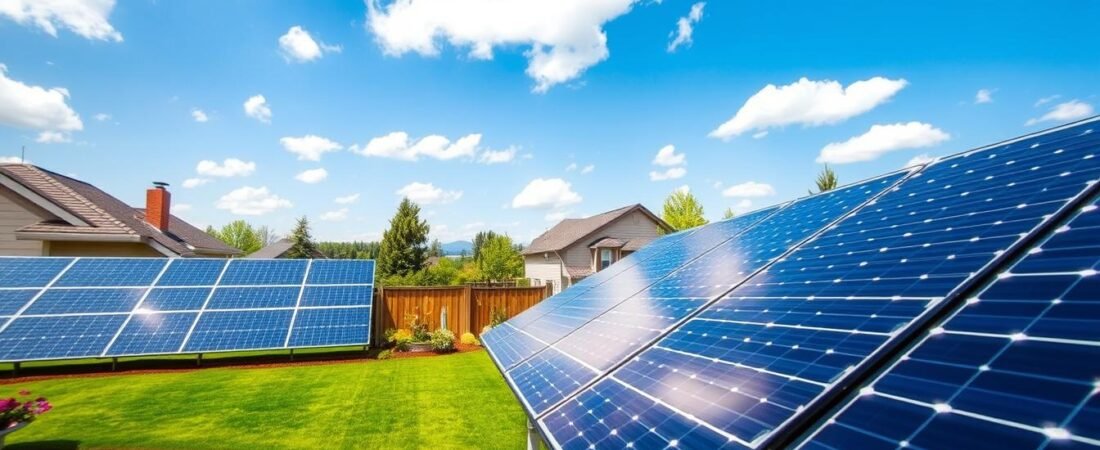
Rising utility bills are pushing many homeowners to look for steady, predictable energy options. Installing a solar option can help lock in rates and protect your household budget. This guide shows how a system affects your home finances and long-term plans.
Before you commit, evaluate your roof size and local tax incentives to get the most value. Consider installation timing, overall costs, and the best panel system for your roof and lifestyle.
Choosing quality equipment lets you generate clean energy and cut reliance on the grid for decades. Understanding total expenses and incentives is the first step toward energy independence for your family home.
Understanding the Solar Landscape in Beaverton
Local goals and resident interest have turned Beaverton into a useful testbed for residential renewable systems. With about 80% of residents showing interest in cleaner options, city planners streamlined permitting to speed up installing solar panels and make projects easier for homeowners.
Beaverton aims for Net Zero Emissions by 2035. That target pushes more households to consider solar energy as a way to reduce carbon footprint while strengthening home power resilience.
Community initiatives and regional programs have also made panels more affordable and accessible. Modern systems boost home efficiency and help support citywide power goals.
Below is a quick comparison of local features homeowners often weigh before installing solar panels.
| Feature | Benefit | Local Impact |
|---|---|---|
| Streamlined Permits | Faster approvals | Quicker installations across neighborhoods |
| Incentive Programs | Lower upfront barriers | Higher adoption rates |
| Community Education | Better planning for homeowners | More efficient, reliable systems |
- Adopting panels supports city targets and raises household energy independence.
- Installing solar helps cut emissions and can improve long-term home value.
Current Solar Panel Cost Beaverton Estimates
Understanding current market rates helps you plan the right system size for your home’s needs.
Average System Pricing
The local average sits at $2.65 per watt. For a typical 11.66 kW installation, that equals about $30,941 as of April 2026.
That figure includes equipment and installation but can change based on brands and roof work.
Impact of System Size
System size is the main driver of total expense. Larger arrays raise the upfront price but produce more energy and cut electricity bills faster.
Compare quotes to see how much system you need to meet your usage and goals.
“Work with a trusted installer and explore Energy Trust of Oregon incentives to lower your upfront expense and boost long-term performance.”
| Metric | Typical Value | Why It Matters |
|---|---|---|
| Average Price | $2.65/W | Benchmarks local quotes |
| Average Size | 11.66 kW | Matches many family homes’ electricity use |
| Estimated Total | $30,941 | Helps plan financing or cash purchase |
| Expected Lifespan | 25–30 years | Long-term value and energy savings |
- Tip: Roof orientation and equipment quality affect installation and performance.
- Tip: Use local incentives to lower the net investment.
Key Factors Influencing Your Total Investment
What you pay depends on a mix of technical specs and household energy habits.
Equipment quality and efficiency matter. High-grade solar panels often perform better and last longer, which can justify a higher upfront price.
Roof size and layout determine how large a system you can fit. A bigger roof usually means more panels and more initial expense, but also more long-term power production.
Installation complexity also affects the total amount. If your setup needs battery storage, roof reinforcement, or tricky wiring, the cost installing solar rises.
“Analyze your household usage to decide how much solar you need and which upgrades make sense.”
- Energy use: Match system size to daily consumption to maximize returns.
- Local rates: Fluctuating electricity prices make a system a solid hedge for your budget.
- Incentives: Tax credits and rebates lower net costs and speed payback.
Navigating Financing and Payment Options
Deciding how to pay for your system affects savings, monthly bills, and long-term returns.
There are three common paths to fund a home setup. Each has trade-offs for ownership, monthly cash flow, and total savings. Read the short summaries below to match a route to your goals.
Solar Loans
Loans let you own the equipment while spreading payments. Many programs offer $0-down options so you can start saving on energy bills right away.
Tip: Factor interest into final savings and compare APRs across lenders.
Leasing and Power Purchase Agreements
Leases or PPAs avoid ownership and cut upfront risk. You pay a fixed monthly fee or a per-kWh rate for produced power.
These options can be simpler, but you may miss tax credits and some incentives tied to ownership.
Cash Purchases
Paying cash usually yields the best long-term return by avoiding interest. Upfront payment maximizes rebates and tax benefits tied to ownership.
“Read every contract line to understand maintenance, transferability, and true lifetime value.”
| Option | Ownership | Best For |
|---|---|---|
| Loan | Owner | Low upfront cash, eventual ownership |
| Lease / PPA | Provider | Low risk, no maintenance |
| Cash | Owner | Max long-term savings |
Compare deals, check your budget, and use local price tools like local price estimates to refine your decision.
Local Incentives and Rebates for Oregon Homeowners
A range of state and municipal incentives can make residential installations far more affordable. Many programs stack, which helps lower your net investment and speed payback.
State and Local Rebate Programs
Energy Trust of Oregon offers guidance, rebates, and customer tools to help homeowners plan a panel system that fits their budget. Use their resources to compare offers and apply for available help.
Federal tax credits often combine with state and local rebates. That pairing reduces the amount you pay up front and improves long-term returns on your system.
- Local rebates cut the initial price and lower installation barriers for many families.
- Check utility and city programs that may offer additional discounts or expedited permitting.
- Document eligibility early so you can claim incentives when the project is completed.
“Researching incentives is one of the best first steps for making your panels beaverton project more affordable.”
Selecting the Right Installation Partner
The right installation partner handles permits, roof work, and technical setup so your system performs well for years.
Look for proven credentials. Companies like Sunpath Services earned the Energy Trust of Oregon award for quality and service. That recognition shows reliable workmanship and customer care.
Ask about equipment and tech. A professional team will explain the technology they use and how it affects performance and long-term quality.
- Compare detailed quotes to balance price and service.
- Verify local permits and safety checks for installation beaverton.
- Confirm the installer will optimize roof layout to maximize power output.
“Selecting a reputable installation partner is the most important step to ensure your system operates efficiently for years.”
| What to Check | Why It Matters | Questions to Ask |
|---|---|---|
| Reputation & Awards | Shows consistent quality | Can you share references and certifications? |
| Equipment & Tech | Drives long-term performance | Which brands and warranties do you offer? |
| Service & Support | Reduces future issues | How is maintenance handled and what is included? |
Long-Term Savings and Property Value Impact
Long-term savings from a home renewable system often show up in both monthly bills and resale value.
Calculating your payback period starts with simple math. Add your upfront investment and subtract available incentives and tax credits. Then divide that net amount by the annual reduction in electricity bills.
Example: if net investment is $20,000 and you save $1,500 a year, the payback period is about 13 years. Shorter payback times occur with higher local rates and larger systems sized to meet most household demand.
Boosting home equity
Research shows installing a solar panel system can raise home value by roughly 4.1% in today’s market. That uplift improves resale appeal and can offset part of your initial outlay.
Ownership matters: when you own the equipment, savings continue after the payback period and accrue to your household, not a leasing company. High-quality equipment also supports reliability and long-term value.
“A well-chosen system cuts bills, reduces your carbon footprint, and increases home equity.”
- Calculate payback using net investment, annual savings, and local electricity rates.
- Factor in system size, roof orientation, and available incentives when estimating savings.
- Use a local price guide like local price guide to refine your numbers.
Conclusion
A clear plan and a trusted installer turn home energy upgrades into reliable long-term savings. Take time to compare multiple bids so you get the best equipment and service for your property.
Use local incentives and available rebates to lower your net expense. This approach makes the transition more affordable and speeds up payback.
Beaverton’s push toward Net Zero creates a helpful backdrop for homeowners pursuing clean energy. With the right installation and choices, you can cut monthly bills and boost home value for years to come.