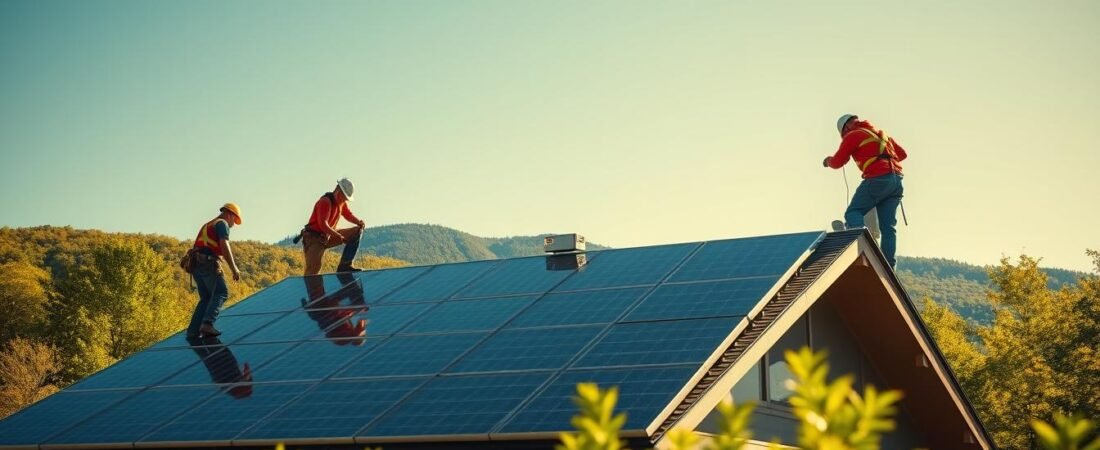
Thinking about clean energy for your home? This quick guide helps Vermont homeowners weigh costs, incentives, and long‑term value. Electricity in the state averages 22.14¢ per kWh, well above the national 16.6¢ rate, making efficiency and on‑site systems more attractive.
What to expect: As of 2026, average prices sit near $3.08 per watt for residential installs. The federal tax credit cuts total system costs by 30%, and a state sales tax exemption can save roughly $1,000 on equipment up to 500 kW.
The guide also explains net metering and how excess power can offset your bill. Zillow data shows homes with panels sell for about 4.1% more, so there are both savings and property value gains to consider.
Ready to learn the details? Continue reading to compare cash purchase versus lease, review equipment needs, and estimate payback years so you can decide if this investment fits your home and budget.
Why Vermont Homeowners Are Switching to Solar Energy
Higher bills and greener goals are pushing change. Facing rising rates, many homeowners are choosing on-site systems to limit monthly expense swings. Between 2021 and 2024, electricity climbed from 19.3¢ to 22.1¢ per kWh — about a 15% increase.
Rising Electricity Rates
Grid costs in this state are higher because delivering power across rural, mountainous areas costs more. Green Mountain Power covers roughly 75% of customers and tracks these trends closely.
Environmental Impact
Generating power at home cuts your carbon footprint. It also pairs with net metering and local incentives to boost long-term savings and property value.
“Investing in panels and a reliable system can stabilize costs for the next 25 years.”
- Reduce grid dependence and protect against future rate hikes.
- Combine tax incentives with net metering for better returns.
| Driver | Impact | Typical Benefit |
|---|---|---|
| Rising rates | Higher monthly bills | Stabilized costs over years |
| Net metering | Credits for excess power | Lower seasonal bills |
| Tax & incentives | Lower upfront cost | Improved payback and property value |
Understanding the Costs of Solar Panel Installation Vermont
Estimating the true cost starts with system size and local permitting fees. A 7.2 kW system is a common choice. At the current average price of $3.08 per watt, that size often totals about $15,190 after the federal tax credit.
Several factors shape the final price. Equipment quality, roof complexity, and labor rates matter. Larger systems usually lower the cost per watt because of bulk pricing.
Factors Influencing System Price
- System size: More kilowatts raise the upfront price but can cut unit cost.
- Equipment: Higher-efficiency panels and inverters cost more but deliver better long‑term value.
- Soft costs: Permits, inspections, and the installer’s margin affect total cost.
- Site work: Roof repairs or complex mounts add to labor and materials.
| Item | Typical Range | Notes |
|---|---|---|
| Cost per watt | $2.80 – $3.50 | Average: $3.08/watt in 2026 |
| 7.2 kW system (after tax) | $14,000 – $16,500 | Example: ~$15,190 post federal tax credit |
| Permitting & fees | $300 – $1,200 | Varies by town and project complexity |
| Roof/structural work | $0 – $3,000+ | Depends on condition and mounting needs |
Get multiple quotes from a trusted solar installer. A careful comparison helps homeowners balance upfront price with long‑term savings and system performance.
Navigating Federal and State Solar Incentives
Tax breaks and state rules can cut thousands from your system bill, so know what applies before you sign.
Federal Tax Credit Overview
The federal solar tax credit lets homeowners claim 30% of the installed cost on their taxes. That credit lowers the net cost and improves payback years for many systems.
State Sales Tax Exemption
Vermont offers a 6% sales tax exemption on PV equipment for systems up to 500 kW. That saves the average home about $1,000 on equipment costs.
Property Tax Benefits
The state also protects homeowners from higher assessed value for residential setups under 50 kW. This means your property tax bill should not rise because of new panels.
“Combine federal and state credits to significantly cut the investment and improve long‑term savings.”
- Confirm system size limits to qualify for each benefit.
- Check legislative updates like Act 179 that may change rules.
- Always consult a tax professional to apply credits correctly each year.
The Role of Net Metering in Your Energy Savings
When your home makes more electricity than you use, net metering converts that excess into savings on later bills. Net metering lets you earn credits for extra power your system sends to the grid.
Most utilities in the state, including Green Mountain Power, credit excess at near‑retail rates. GMP credits excess generation at about $0.1999 per kWh. Credits post to your monthly bill and reduce the cost of electricity you buy later.
Credits roll on a 12‑month cycle. Use them within a year or they expire under utility rules. This timing matters for seasonal systems and annual tax planning.
System sizing affects value. Oversizing may waste credits; undersizing leaves you buying more power at retail rates. New Act 179 rules (2026) may limit group metering to on‑site or adjacent parcels, so check local policies.
“Net metering effectively turns your home into a small power plant that supports the grid and cut costs.”
- Confirm how your utility applies credits before committing.
- Optimize system size to match annual usage for max savings.
- Factor credit timing into payback and tax calculations.
Selecting the Right Solar Equipment for Your Roof
Choose gear that suits your roof and long‑term goals. Prioritize high efficiency and durable warranties to protect your investment. Good equipment reduces upkeep and keeps your system producing for years.
Efficiency and Power Output
Look for modules that deliver at least 450 watts in full sun to maximize output on limited roof space. High‑efficiency products take up less area and deliver better per‑square‑foot results.
Premium pieces also show slower degradation, so power stays higher over decades. Many top brands back this with ~25‑year performance warranties.
Battery Storage Integration
Plan for a compatible inverter if you want batteries later. Integrated systems can supply lights and appliances during outages and reduce peak grid draws.
Choose batteries that meet utility program specs, especially for local metering and incentive rules. Your installer can confirm compatibility with Green Mountain Power programs and local requirements.
“Investing in durable, high‑performance equipment ensures reliable electricity and better long‑term value.”
- Select high-efficiency modules (≥450 W) for tight roofs.
- Match inverter type to roof layout and future battery plans.
- Prefer equipment with 25‑year warranty terms for peace of mind.
- Verify battery compliance with local utility and incentive rules.
How Solar Panels Impact Your Property Value
Many buyers pay more for homes that already produce part of their own electricity.
Real market research shows a clear boost. Zillow found houses with solar panels sell for about 4.1% more. On a $400,000 home, that equals roughly $16,400 added value.
The state protects that gain with a property tax exemption for systems under 50 kW. This means the extra market value does not raise your property tax bill.
Buyers often view an existing system as an energy benefit and a lower ongoing cost. That perception can shorten time on market and support a higher asking price.
“The long-term energy savings provided by the system serve as a major selling point.”
| Benefit | Impact | What it means for homeowners |
|---|---|---|
| Higher resale value | ~4.1% average gain | About $16,400 on a $400,000 home |
| Property tax protection | Exemption under 50 kW | No higher tax due to added value |
| Buyer appeal | Perceived lower electricity cost | Faster sale and stronger offers |
Choose professional installation to keep the look tidy and maximize curb appeal. The combination of increased value and lower utility cost makes this investment attractive for many homeowners.
Working with Local Solar Installers
Choose an installer who knows local codes and will stay nearby to support your system for years. Local, family-owned companies often offer quicker service and clearer communication than national chains.
Ask for data on prior installations in your town so you can see how crews handle similar roof types and snow-load concerns.
Get at least three quotes. Compare equipment quality, warranty terms, and total cost. Avoid offers that feel much cheaper than the rest—those can mean low-quality panels or weak business support.
“A reputable installer will handle permits and the Certificate of Public Good for you.”
- Request documentation of past systems in your area.
- Confirm the team files required permits and tax paperwork.
- Prefer companies that explain long-term service and warranties.
| What to Check | Why it Matters | How to Verify |
|---|---|---|
| Local experience | Smoother permitting and faster service | References, photos, and local project data |
| Equipment & warranties | Lower risk and better performance | Written warranty terms and brand names |
| Paperwork handling | Ensures tax and incentive claims are correct | Ask if they complete the Certificate of Public Good |
To learn more about selecting a trusted crew, visit about our local team for an example of how a responsive installer presents references and project data.
Comparing Cash Purchases Versus Solar Leasing
Deciding whether to buy with cash or sign a lease affects your control, savings, and who claims tax benefits.
Cash purchase: Own the system outright. You control equipment choice and performance. You also qualify directly for most federal credits and state incentives. This tends to give the best long-term cost savings, but it requires the highest upfront cash outlay.
Leasing: Often requires little or no upfront cash and transfers ownership to the provider for the lease term, commonly ten years. The provider handles maintenance, repairs, and performance guarantees. That convenience reduces short‑term hassle but can change how tax credits apply.
“Weigh long-term savings against convenience: ownership typically saves more, while leasing lowers initial cost and upkeep burden.”
- Both routes generally allow net metering credits and reduce electricity bills.
- Check the contract for production guarantees, transfer rules, and end‑of‑term options.
- Review how third‑party ownership affects federal tax credits and state incentives.
| Option | Upfront Cost | Who Owns | Maintenance |
|---|---|---|---|
| Cash purchase | High | Homeowner | Homeowner or warranty |
| Lease | Low / None | Provider | Provider (usually included) |
| Shared savings / PPA | Low | Provider | Provider |
For a clear comparison and deeper pros and cons, read this leasing vs buying guide.
Conclusion
Deciding to add a home energy system is both a financial choice and a long‑term lifestyle shift. For many homeowners, properly sized solar panels lower monthly electricity bills and add measurable resale value. Take time to compare a cash purchase versus third‑party options and confirm how tax credits and state incentives apply to your project.
Net metering remains central to value and savings. Match system size to annual use and choose durable equipment to protect returns for years. Get multiple quotes from local crews and review warranties and service commitments before you sign.
Ready to learn more? Explore a better path for regional details and current incentives to lock in credits and lower your long‑term costs.