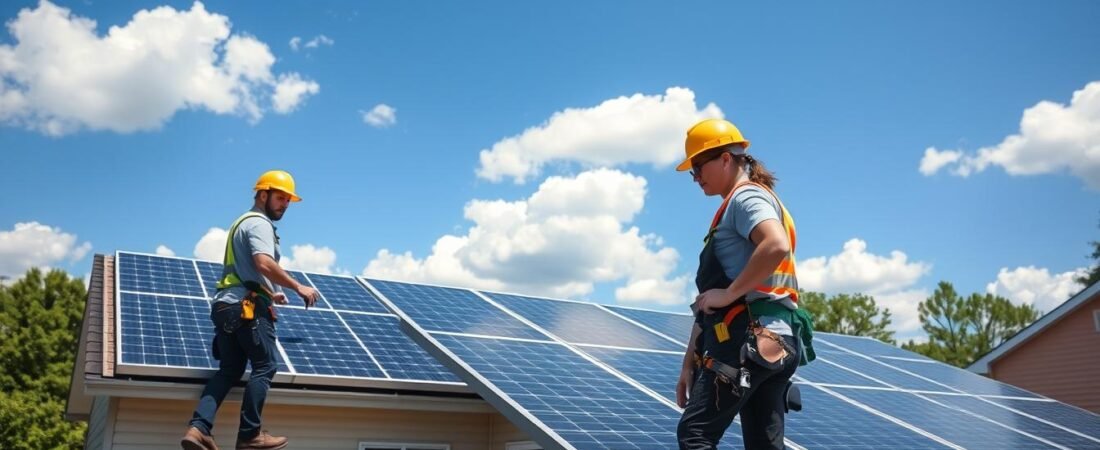
Choosing the right installer shapes the next 25 years of your home system. Our guide brings together ratings from SolarReviews and real New Jersey residents to help you find trusted options fast.
We know this is one of the biggest decisions you’ll make for your property. The list focuses on reliable customer service, long-term warranties, and installers who understand state rules and weather patterns.
Use this short guide to compare providers, read verified reviews, and narrow choices for installation. You’ll learn which companies offer strong warranties and solid local support.
Start here to make an informed choice. Our experts simplify the process so homeowners can pick a reputable company with confidence.
– Trusted ratings and resident reviews help identify top installers.
– Proper selection affects system longevity and service quality.
– This guide makes comparing installers and installation straightforward.
Why New Jersey is a Prime Location for Solar Energy
New Jersey’s policy and climate make it a smart choice for homeowners who want clean, cost-cutting energy.
State utilities offer full retail net metering, which lets households receive credit for excess generation at retail rates. That policy boosts payback and increases yearly savings.
The state is also rolling out battery-specific incentives to promote storage. Adding storage helps homes keep power during outages and maximizes value from time-based rates.
New Jersey gets enough sunny days to make rooftop systems productive across seasons. Many local providers are expanding to meet growing demand for renewable setups.
- Net metering: Full retail credits for exported electricity.
- Battery incentives: Programs to support home storage adoption.
- Year-round yield: Sufficient sunlight for meaningful generation.
- Long-term savings: Lower bills and stronger resale appeal for homes.
| Feature | Benefit for Homeowners | Impact on Costs |
|---|---|---|
| Full retail net metering | Credits for excess output | Faster payback |
| Battery incentives | Lower storage costs | Improved backup and value |
| Steady sunlight | Reliable yearly production | Consistent bill reductions |
How to Evaluate Top Solar Panel Companies in NJ
Start by checking verified review scores and company tenure to separate top-tier installers from the rest. Focus on clear signals that point to reliable service and long-term support for your home system.
Customer Review Scores
Public reviews reveal how a provider handles sales, scheduling, and post-install support. Look for consistent, recent feedback across Google, Yelp, and SolarReviews.
High average ratings and detailed comments are more meaningful than a single glowing or negative post.
“Check how a company responds to complaints—good follow-up often matters more than a perfect score.”
- Ratings: Compare averages across platforms.
- Comments: Watch for notes about installation timelines and warranty handling.
- Response: A prompt, professional reply to issues shows accountability.
Years in Business
Prefer providers with an established track record. We suggest at least five years of local experience to ensure warranty support and long-term service.
Large-scale players like Solar Landscape, which has developed over 75 million square feet of commercial rooftop projects, show the scale and processes that top-tier firms bring.
- Seek clear history of completed jobs and verified references.
- Compare multiple quotes from trusted installers to find the best options for your home.
Essential Credentials for Your Solar Installer
Before you sign a contract, confirm the credentials that protect your home and investment.
All providers must be registered with the New Jersey Consumer Affairs office to operate legally. This registration safeguards homeowners during the installation process.
Licenses and Certifications
A qualified installer should hold a home improvement contractor, plumber, or electrician license. These credentials ensure work meets state codes and safety standards.
Look for companies that employ NABCEP certified technicians. NABCEP is a respected mark of technical training and professional responsibility.
- Registration: Legal operation and consumer protections.
- Trade license: Safety and code compliance for each installation.
- Certification: Higher technical expertise and quality assurance.
- Insurance: Coverage for workers and property during the project.
| Credential | Why it matters | What to ask |
|---|---|---|
| State registration | Protects homeowners legally | Request registration number |
| Trade license | Ensures safe, code-compliant work | Verify license type and expiration |
| NABCEP certification | Shows professional expertise | Ask for certified staff on site |
| Liability insurance | Covers accidents and damages | Request proof of insurance |
Understanding Solar Financing Options and Incentives
Knowing how to combine loans, credits, and state rebates makes installing a home system far more affordable.
The 30% federal tax credit applies to buyers who purchase panels or battery storage. That credit cuts the upfront bill and improves payback time for homeowners across New Jersey.
State programs can lower the ongoing cost as well. New Jersey offers a Property Tax Exemption for Renewable Energy Systems and the Successor Solar Incentive Program (SuSI) to boost adoption.
If you cannot pay cash, explore financing options like loans, leases, or power purchase agreements. Each choice affects monthly cost, ownership, and long-term electricity savings.
- Federal tax credit: 30% off eligible installation costs.
- State incentives: Exemptions and SuSI lower total cost.
- Financing: Loans and PPAs give flexible paths to go solar.
“Understand total system cost after incentives to compare offers fairly.”
Many solar companies offer flexible plans to help manage payments while maximizing savings. Ask each company for a net cost estimate that factors in all incentives and the expected electricity reduction.
Comparing Quotes for Your Home Solar System
Collecting several detailed estimates reveals differences in equipment, labor, and projected savings. A clear quote should list system size, estimated annual energy production, and the total cost.
System Size and Energy Production
Match system size to your usage. Ask each installer for a production estimate based on your utility bills and roof orientation.
A professional quote shows expected annual kilowatt-hours and the assumed system size in kilowatts. This makes apples-to-apples comparisons easier.
Pricing Per Watt
Verify the price per watt. In New Jersey the average ranges from $2.22 to $3.34 per watt.
Be wary of quotes well below that range. Very low offers may use lower-grade equipment or skip critical warranties.
Payback Period
Compare net cost and yearly savings to calculate payback. A shorter payback means quicker savings and a stronger investment.
“The payback period tells you when the system has paid for itself through electricity savings.”
- Get at least three quotes from different installers to ensure fair market pricing.
- Request both a cash price and a financed price so you can see dealer fees and interest effects.
- If considering a lease, ensure any escalator clause is below expected local electricity increases (aim near 3% or less).
| Metric | Good benchmark | Why it matters |
|---|---|---|
| Price per watt | $2.22–$3.34 | Shows equipment + labor value |
| Number of quotes | 3+ | Ensures competitive offers |
| Payback period | Varies by usage | Measures investment recovery |
Pro tip: Use a trusted directory to find reputable bids — for example, check New Jersey installer listings at New Jersey installer listings before you schedule quotes.
The Importance of Quality Equipment and Warranties
Prioritizing quality gear and clear warranty terms prevents costly surprises down the road. Choose equipment with proven output and long manufacturer coverage to protect your home’s energy generation.
We recommend an installer that offers at least a ten-year labor warranty for the full system. That workmanship guarantee covers fixes from installation damage and poor connections.
- Durable modules: Most modern solar panels are ~400 watts and exceed 19% efficiency, and they typically include a 25-year performance warranty.
- Workmanship warranty: Ask for written labor coverage of ten years or more from your installer or company.
- Performance guarantees: Some providers, like SunPower, back system output with a performance promise to ensure expected generation.
“Always get brands and warranty terms in writing so you know who is responsible if output falls short.”
Ask about specific equipment brands and compare the total warranty package. A strong mix of high-grade equipment and multi-year coverage keeps your investment protected.
Navigating the Solar Installation Process
Knowing the steps of a home energy installation makes the process less stressful.
What to Expect During Installation
A site visit kicks off the project. A pro inspects roof condition, shade, and meter location to size your system correctly.
After you sign the contract, the installer files permits and orders equipment. This removes most paperwork from your plate.
On install day, crews build racking, run wiring, mount panels, and set up inverters. Most homes finish in one to three days.
Once work is complete, a local government inspector checks safety and issues final approval before interconnection with the utility.
- Step 1: Site survey and shading report.
- Step 2: Permitting and equipment delivery managed by your installer.
- Step 3: One–three day on-site build: racking, wiring, and module placement.
- Step 4: Local inspection and final hookup approval.
| Phase | Typical Time | Who Handles It |
|---|---|---|
| Site assessment | 1 visit | Installer representative |
| Permits & orders | 1–4 weeks | Installer / local offices |
| On-site installation | 1–3 days | Installation crew |
| Inspection & interconnection | 1–3 weeks | Town official & utility |
“Choose a reliable company that manages permits and inspections to avoid delays.”
Benefits of Adding Battery Storage to Your System
Energy storage changes an intermittent generation source into a dependable supply for everyday needs. A battery lets you keep extra output and use it when the grid goes down or when rates spike.
Adding storage provides reliable backup during outages and smooths household usage after sunset. That peace of mind often matters more than raw payback numbers.
New Jersey is developing battery-specific incentives that may lower the upfront cost and improve the return for homeowners who add storage to their system. Still, including a battery will typically raise initial installation cost and can extend payback time.
- Backup power: Store excess energy for outages and critical loads.
- Higher self-use: Use more of what you generate and rely less on the grid.
- Incentive-ready: State programs may make storage more affordable soon.
Consult with your installer or local companies to weigh options and determine if a battery fits your home, usage patterns, and cost goals.
Expert Tips for Selecting a Reliable Partner
Prioritize transparency: choose a company that lays out clear pricing, shows references, and explains long-term warranty coverage.
Ask for third-party ratings and recent reviews from sources like SolarReviews to confirm reputation and financial stability. A trustworthy installer will welcome that scrutiny.
Request documented answers about equipment choices, expected electricity production, and who handles service after installation.
Get multiple quotes and compare net cost, projected savings, and the length of workmanship guarantees. Choose a firm with several years of local experience and steady customer feedback.
“A reliable partner will be transparent about business practices and provide honest pricing for your home system.”
- Verify ratings and ask for references from recent customers.
- Confirm how warranty claims are managed and who pays for replacements.
- Consider established groups like Solar Landscape as examples of proven operators.
Conclusion
,Choosing the right installer now can lock in years of cleaner energy and lower electricity bills.
Transitioning to solar energy is a smart move for many New Jersey homeowners. Evaluate installers by credentials, customer reviews, and clear warranty terms to find a trusted company.
Always compare multiple quotes to spot differences in equipment, labor, and projected savings. Factor federal and state incentives into net cost so you see true value.
With the right company and installer by your side, you gain reliable electricity, strong protection for your investment, and a meaningful step toward a more sustainable future.