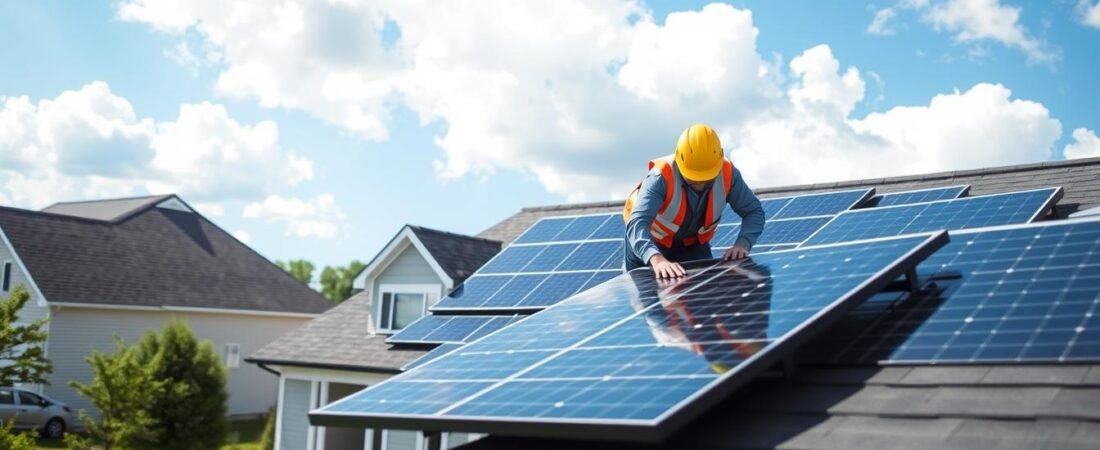
Ready to cut costs and boost clean energy at home? Our friendly team helps homeowners move to reliable renewable energy with clear steps and attentive service.
We guide you through each step of the process so your projects stay on track. From site assessment to final permits, our experts handle the details.
Choose a team that simplifies power upgrades. You get tailored solutions that match your property needs and long-term goals.
Interested in a full list of what we offer? Visit our services page to learn how our service helps you manage permits and enjoy better energy performance.
Why Choose Solar Energy for Your Home
Homeowners can see real savings by shifting to renewable electricity. Water heaters alone account for nearly 20% of household energy use, so targeting hot water makes a big difference.
Lower monthly bills: Using solar power lets you tap into renewable sources that cut utility costs over time. You pay less and gain long-term savings.
Stable home power: Generating clean electricity on-site helps stabilize usage and reduces reliance on grid fluctuations. That means fewer surprises at the meter.
Smart investment: Installing panels lowers the cost of energy consumption and supports a sustainable future. It is both practical and planet-friendly.
- Reduce energy bills
- Lock in long-term savings
- Support reliable, clean power
| Benefit | Short-Term | Long-Term | Who It Helps |
|---|---|---|---|
| Lower utility bills | Visible within months | Decades of savings | Homeowners |
| Reduced grid dependence | Less peak exposure | More stable power | Families & renters |
| Environmental impact | Lower emissions now | Significant carbon reduction | Community & future generations |
Professional Solar Panel Installation Montgomery County Services
A careful roof assessment is the first step toward a high-performing home energy system. Our team uses tools like the PVWatts® Calculator, SunCalc, and Project Sunroof to map shade and orientation. This helps predict output and choose the best system size.
Assessing Your Roof Potential
We check roof slope, shading, and structure to avoid surprises. The site review also flags wiring and permit needs early.
Selecting a Certified Installer
We connect homeowners with providers certified by the North American Board of Certified Energy Practitioners (NABCEP) to ensure quality work.
Our service addresses your energy needs and aligns projects with the county goal of being carbon neutral by 2035. We handle steps from site survey to securing electrical permits so systems meet local standards.
- Advanced shading and yield analysis using PVWatts®, SunCalc, Project Sunroof
- Connections to NABCEP-certified providers for high quality systems
- Permit support and expert guidance through every step of the process
| Service Step | What We Do | Benefit |
|---|---|---|
| Site assessment | Shading map, roof integrity check | Better system sizing and fewer surprises |
| Installer selection | NABCEP-certified matching | Reliable workmanship and performance |
| Permitting | Handle building & electrical permits | Code compliance and faster approvals |
Learn more about local incentives and the broader advantages for homeowners by checking the benefits in Montgomery County.
Understanding the Permitting and Regulatory Process
Permits and local rules shape how a home energy project moves from plan to power.
Navigating Building and Electrical Permits
A building permit is required for any structural attachment, and an electrical permit is needed to tie your system to the grid. These two approvals are separate but both are mandatory for a safe, code-compliant outcome.
Visit the eSolar webpage to submit your building permit application electronically. The portal streamlines applications and helps reduce back-and-forth with county reviewers.
Navigating Building and Electrical Permits
What we do: Our team prepares the documents and provides clear information so your panels and electrical systems meet local regulatory needs for your site.
We manage the permit workflow, coordinate inspections, and follow up on approvals. This keeps projects on schedule and avoids unnecessary delays.
“A clear permit plan saves time and reduces surprises during the final inspection.”
- Both building and electrical permits are required for home energy projects.
- Use the eSolar portal for electronic building permit submission.
- Our service handles paperwork, inspections, and regulatory questions on your behalf.
Exploring Financing Options for Your Renewable Energy Project
A range of local lending and incentive options can slash upfront costs for homeowners. The Montgomery County Green Bank offers loans and guidance to make projects more affordable.
The Community Solar Pilot Program began in 2015, and H.B. 908 creates a pathway to a permanent program in 2025. These developments expand shared power choices for residents.
Our team helps you compare financial providers and pick the best route for your needs. We also offer clear information about permits and the next step in the process.
- Explore Green Bank loans to lower upfront cost and reduce total project cost.
- Use community programs to access alternative power without rooftop changes.
- Let our team coordinate financing, providers, and permit paperwork for smoother progress.
“Choosing the right financing can turn a big expense into manageable monthly savings.”
Ready to take the next step? We provide the facts and contacts you need to secure funding, manage permits, and make long-term savings a reality.
Common Solar System Configurations
From ground arrays to rooftop setups and parking canopies, each option fits different site needs.
Ground Mounted Systems
Ground arrays are ideal when you have open land and want steady output. These systems can be sized to match farm or large-lot needs.
Under ZTA 20-01, Montgomery county allows larger projects in the Agricultural Reserve, with a cap of 1,800 acres for collection systems. That rule helps guide large-scale site planning.
Rooftop Solar Arrays
Rooftop setups make sense for most homes because they use existing roof space and reduce land impact. We focus on roof integrity and long-term quality when recommending equipment.
Proper design and certified installation ensure the system performs well and gives reliable power for years.
Solar Parking Lot Structures
Canopies over parking areas provide shade and dual-use value. These structures boost energy output while protecting cars and adding usable shade.
They are a smart choice for businesses and multi-family properties. Our team helps homeowners and property managers pick the best systems and structures for each site.
- Professional options: ground-mounted, rooftop, and parking lot structures.
- Regulatory note: ZTA 20-01 limits Agricultural Reserve collection to 1,800 acres.
- Benefit: Choose the configuration that maximizes energy and matches site conditions.
Conclusion
Making the move to cleaner energy gives homeowners control, predictable costs, and peace of mind. Choosing renewable energy and reliable solar energy systems can deliver measurable savings and stronger home resilience.
Our professional team simplifies the installation process and handles paperwork so your needs are met with clear, friendly support. Trust our service to guide the process from planning to activation and help you enjoy long-term benefits. Contact the team today to learn how we can help you start saving.