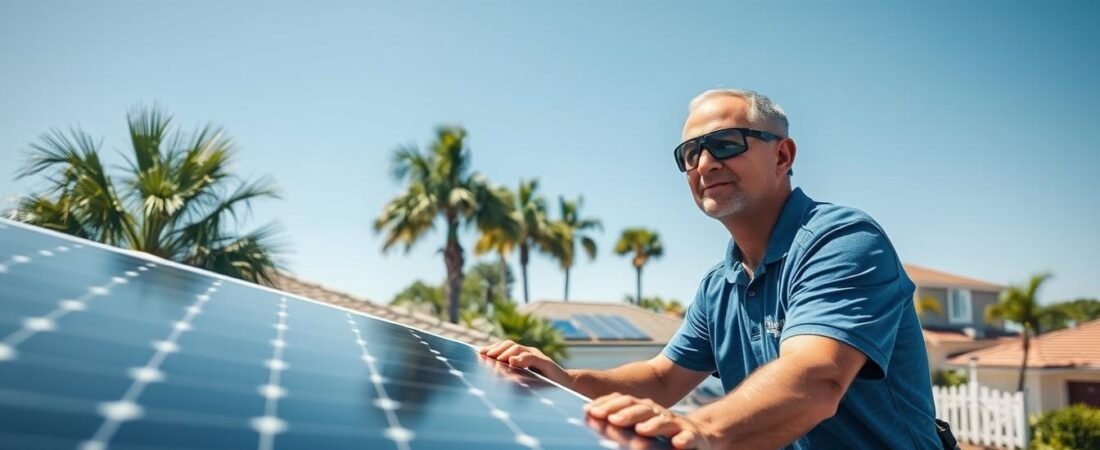
Looking for a trusted installer for home energy upgrades? This guide helps homeowners find vetted providers with real experience and strong warranties. SunFarm Energy, a NABCEP-certified contractor licensed in the region, has served the area since 2011.
Choosing quality takes time, but it pays off in long-term savings and peace of mind. Our directory reviews contractor experience, equipment, and customer feedback to highlight the best options for your roof and budget.
We focus on practical data: service areas, years in business, installation standards, and warranty terms. Each listed installer was vetted for complex roof work and professional module installation.
Use this short guide to compare ratings, read real reviews, and ask the right questions before committing. The right provider will make the switch smooth and protect your investment for years to come.
Why Switch to Solar Energy in Pensacola
Switching to rooftop systems helps households avoid surprise rate hikes and keeps lights on when the grid is stressed. Homeowners gain energy independence and steady savings over time.
Installing solar panels at your home or business protects against outages and rising utility costs. Modern, high-efficiency equipment means many people ask how much solar is needed — and the answer is often less than you expect.
New smart home tech links generation to storage and load control. You can monitor production in real time, and adjust usage with a mobile app.
- Resilience: Backup power during storms and grid instability.
- Financial gain: Long-term savings and higher property value.
- Control: Real-time monitoring of generation and panel output.
For many residents, the switch is a practical step that combines comfort, value, and sustainability.
Top Rated Solar Panel Companies Pensacola FL
The best local teams deliver transparent quotes, verified experience, and reliable service.
SunFarm Energy is a NABCEP-certified contractor serving the Panhandle and southern Alabama. They handle PV and battery backup for both homes and businesses. As a Solar Insure Certified Provider, they offer industry-grade warranties that protect your investment.
Local service areas include Gulf Breeze, Navarre, and Fort Walton. Our reviews focus on clear data: years of experience, roofing compatibility, and expected cost and timeline. That helps homeowners pick an installer that fits their roof and budget.
Local Service Areas
- Gulf Breeze — residential and commercial system installs.
- Navarre — battery backup and grid-tied solutions.
- Fort Walton — complex roofing work and equipment upgrades.
Professional Certification Standards
Top-rated teams maintain strong credentials. NABCEP certification signals trained technicians and code-compliant work.
What to ask: inquire about warranty coverage, equipment brands, and projected results. Use our short guide and local reviews to vet responses before you sign.
| Provider | Certifications | Service Areas | Specialty |
|---|---|---|---|
| SunFarm Energy | NABCEP, Solar Insure | Gulf Breeze, Navarre, Fort Walton | PV systems & battery backup |
| Local Installer A | NABCEP | Panhandle region | Residential rooftops |
| Local Installer B | State licensed | Southern Alabama & Panhandle | Commercial systems & roofing work |
For a full list of services and to compare equipment and timelines, visit our service page at solar installation services.
Understanding the Solar Installation Process
A good installer walks you through permits, roof prep, and final inspections before any work begins. This sets clear expectations and helps you track progress from the first site visit to the final hookup.
Site Assessment and Permitting
Site Assessment and Permitting
The process starts with a site visit where a certified installer inspects your roof and electrical panel. They collect data needed for permits and for a safe design.
Permit approval can take days to weeks depending on local rules. Your installer typically submits plans and handles municipal paperwork as part of the service.
Installation Timeline
The on-site installation usually takes one to three days. Crews mount racking, run wiring, and set inverters and panels on the roof.
Complex roofs or added equipment may add time. Good communication from your installer keeps the schedule clear.
System Inspection and Interconnection
After hardware is ready, a town inspector checks the work to meet safety codes.
Final approval for interconnection lets your home or business go live. Once the utility signs off, your system can begin producing energy.
- Tip: Ask your installer for a timeline and permit status updates.
- Tip: Confirm who will handle the town inspection and utility paperwork.
Financial Incentives and Tax Credits
A limited-time federal credit and rural grant options can change the math on an installation.
The 30% Federal Tax Credit applies to systems installed and interconnected in 2025. It expires on January 1, 2026, so timing affects your out-of-pocket cost.
The Rural Energy for America Program (REAP) offers grants and loan financing for farmers and rural small businesses. This program can help cover equipment and project costs for eligible applicants.
- Maximize savings: Work with a qualified company to ensure your installation meets credit rules.
- Paperwork help: Many installers guide clients through claim forms and permits to save time.
- Long-term value: Locking in incentives now lowers cost and improves payback on your system.
| Incentive | Who Qualifies | Key Benefit |
|---|---|---|
| 30% Federal Tax Credit | Homeowners & businesses | Reduces federal tax liability for eligible systems |
| REAP Grants & Loans | Farmers & rural small businesses | Grant funding and low-cost financing for equipment |
| Installer Assistance | All clients | Helps navigate paperwork and interconnection timing |
Choosing the Right Equipment for Your Home
A carefully chosen system turns limited roof space into reliable, high-value generation. Start by prioritizing high-efficiency technology to get more output from each square foot.
High Efficiency Panel Technology
Efficiency matters: higher-rated panels produce more energy in the same area. That helps if your roof is small or shaded.
Durability and warranty are just as important. Choose modules with long-term manufacturer warranty coverage to protect your investment.
- Match inverters and racking to your roof shape and load needs.
- Work with experienced installers who confirm component compatibility.
- Consider modern cell tech that performs better in cloudy or hot days.
Ask a trusted company for clear explanations, itemized cost estimates, and recent reviews. A good installer will explain equipment choices, warranty terms, and expected energy results so you can decide with confidence.
Battery Storage and Energy Independence
Battery storage turns midday surplus into reliable power after sunset and during outages.
The Tesla Powerwall 3 represents the latest home battery tech for homes and business use. SunFarm Energy is a Tesla Certified Installer and has completed hundreds of battery storage projects across the Gulf Coast.
Adding a solar battery to your system stores excess energy for night-time use and keeps essentials running during grid failures.
“A well-designed storage setup can cut peak charges and protect your home when the grid fails.”
- Resilience: Backup power for refrigeration and medical devices.
- Cost control: Shift usage to stored energy during high-rate periods.
- Seamless integration: Certified installers ensure the Powerwall 3 works with your existing equipment.
| Feature | Benefit | Who it helps |
|---|---|---|
| Tesla Powerwall 3 | High-capacity, backup-ready storage | Homes and small business |
| Certified Installation | Faster integration, warranty support | Owners seeking reliable performance |
| Combined system design | Maximized year-round savings | Those pairing high-efficiency panels with batteries |
Choosing a trusted installer and the right battery can move you closer to energy independence. Read local reviews and check installer rating before you decide.
Evaluating Contractor Experience and Warranties
Start by verifying a contractor’s track record to avoid costly surprises later.
Check years in business and request examples of recent projects. Ask for photos, addresses (with owner permission), and contactable references so you can confirm workmanship and schedules.
Look for membership in a warranty network like Solar Insure. SunFarm Energy is part of that network and offers one of the most comprehensive warranty packages available.
Ask specific questions: What does the warranty cover? Who handles claims? How long do equipment and labor guarantees last?
Customer reviews reveal how a company handles problems and follow‑up service. Compare multiple installers in the area and weigh ratings, response time, and documented results.
“A clear warranty and a solid project history are the best predictors of a trouble‑free installation.”
- Verify credentials: licensing and certifications.
- Request data: years of service, past work, and warranty terms.
- Compare offers: timeline, equipment, and customer rating.
| What to Verify | Why it Matters | Red Flags |
|---|---|---|
| Years in business & project history | Shows experience handling complex installations | Vague references or no recent jobs |
| Warranty coverage (equipment & labor) | Protects your investment over time | Short terms or unclear claim process |
| Customer reviews & response time | Indicates service quality and follow‑up | Poor ratings or slow communication |
Exploring Additional Solar Solutions
Consider alternatives that suit your property if your roof has limits or shading.
Beyond traditional rooftop systems, homeowners can choose ground‑mounted arrays, trackers, or solar‑heated water systems to boost efficiency and output.
Site flexibility matters: we evaluate whether your roof, yard, or a shaded lot works best for long‑term performance.
- Ground‑mounted arrays: easier maintenance and better tilt options for higher generation.
- Solar‑heated water: lowers utility bills for hot water and improves overall efficiency.
- Integrated storage: a solar battery adds resilience and emergency backup for home or business.
Our full service covers assessment, design, and installation so each solution meets strict quality and safety standards.
Want a tailored recommendation? Contact SunFarm Energy to compare options and find the best fit for your roof, yard, and budget.
Conclusion
Next step: A confident move to home energy generation can cut bills and raise property value over time.
Choosing top-rated local installers and clear warranty terms helps you get the results you expect. Good service and verified ratings protect your investment and make the installation day smooth.
Tip: Compare quotes, check references, and consider ownership benefits versus leasing. Learn more about the benefits of owning vs leasing to see what fits your goals.
When you pick a trusted company, customers see lasting savings and greater energy independence. Reach out to a local solar company today and start planning a resilient system for your home or business.