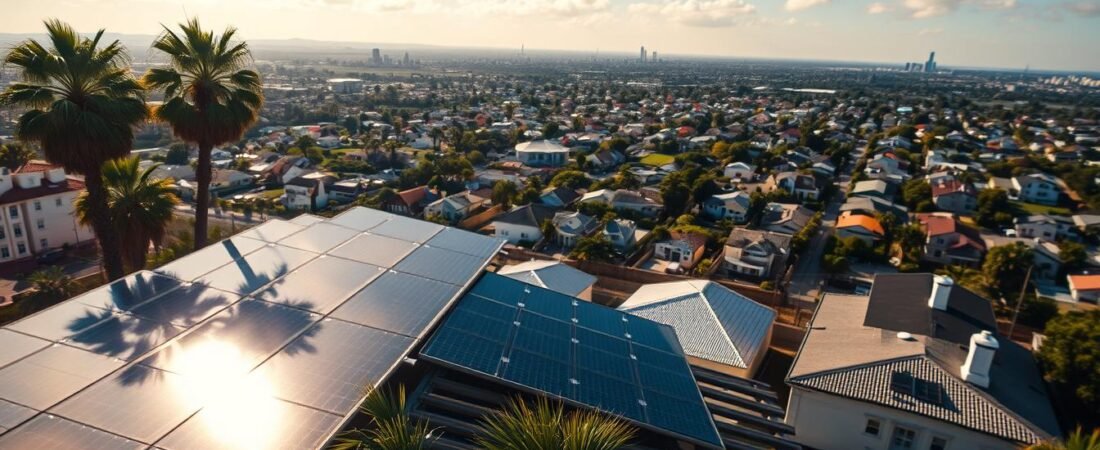
Thinking about a home energy upgrade? This introduction gives a clear snapshot of what homeowners in the United States need to know before they invest.
Key figures matter: as of April 2026, the average system runs about $2.37 per watt including installation. That baseline helps you set a realistic budget.
Over 25 years, typical homeowners in this market expect roughly $176,753 in electricity savings after upfront expenses. Those long-term returns make many upgrades a smart financial move.
Learn how tax credit and solar incentives reduce the net price, and how system size and local rebates affect your outlay. With the right info, you can compare installations, reviews, and payback timelines.
Ready to make an informed choice? This guide will walk you step by step so you can weigh price, performance, and long-term savings with confidence.
Understanding the Solar Panel Cost Los Angeles CA Market
A clear way to set expectations is to look at example system sizes and typical price ranges before incentives.
Real-world figures: a 10.01 kW system commonly falls between $20,205 and $27,337 before rebates and credits. A smaller 5 kW system often costs about $11,872, showing how size directly affects your total investment.
Market note: local competition keeps pricing varied. Many installers use different business models, so the same system can have different out-the-door prices depending on equipment and warranty choices.
- Larger systems usually lower the price per watt but raise the total purchase price.
- Compare installers and read professional reviews to confirm fair pricing this year.
“Shop around and check incentives — they can shrink your net price significantly.”
For current regional numbers, see local pricing data to help plan your energy investment.
Factors That Influence Your Total Installation Price
Your total quote depends less on one item and more on a mix of equipment, size, and site quirks. Knowing what drives price helps you compare bids and spot add-ons that raise a final number.
Equipment Quality
Higher-grade modules and inverters cost more up front, but they often deliver better output and longer warranties. Monocrystalline panels are the go-to choice for modern residential installs because they are more efficient.
Tip: investing in quality gear can mean higher production and lower utility bills over the years.
System Size Requirements
How large a system you need changes the price significantly. Larger systems usually reduce the price per watt since contractors buy panels in bulk.
Ask for proposals that show production estimates so you can weigh incremental savings versus purchase price.
Installation Complexity
Roof angle, shading, and electrical upgrades can add labor and materials. A steep or shaded roof raises the time and skill required, which increases the final invoice.
Always get a professional site assessment before committing. For local pricing context and vetted installers, check a trusted comparison like solar panel installation.
“Get multiple quotes and a site visit to avoid surprises in your final price.”
Navigating Federal and State Solar Incentives
Federal and state programs can cut the net price of a new home energy system dramatically. Start by noting the major federal benefit and then layer in local rebates to see your real savings.
Federal Tax Credit Benefits
The federal investment tax credit (ITC) currently covers 30% of the value of your system. You claim this credit on your tax return in the year after installation.
This credit applies to qualifying equipment and helps reduce the effective purchase price right away.
California State Rebates and Programs
California changed how excess electricity is credited with the Net Billing Tariff (NEM 3.0) on April 14, 2023. That affects earnings for exported power and may shift the best mix of panels and storage for your home.
- SGIP rebates offer $150–$1,000 per kWh for battery storage installed by eligible homeowners.
- The Active Energy System Property Tax Exclusion prevents a property tax increase from adding to your annual costs.
“By combining federal tax credit benefits with state-level incentives, homeowners can drastically reduce the net cost of their home energy systems.”
Financing Options for Your Home Energy System
Smart financing can let homeowners start saving on electricity the day installation begins. Choosing the right plan affects monthly bills and the overall price you pay.
Popular choices include loans, property-based programs, and third-party ownership. PACE financing allows homeowners to repay solar and battery storage via a property tax assessment over 10 to 20 years. That spreads payments across many years and ties repayment to the property.
Some lenders offer $0-down loans so you can reduce your electricity bill immediately if loan payments are lower than current bills. Leases and PPAs let you get immediate savings with no upfront funds for those who prefer not to own systems.
- PACE: long-term property tax repayment for installations.
- $0-down loans: start saving on day one if payments beat utility bills.
- Leases / PPAs: no ownership, instant savings for many homeowners.
Remember that interest rates and the tax credit affect long-term savings. Compare multiple quotes to find the best price and incentives for your home energy system.
Long Term Savings and Payback Periods
Understanding payback timelines turns an abstract idea into a clear investment decision.
Average payback: local data shows a typical system reaches payback in about 6.11 years. That means savings start to accumulate after this point.
A 10 kW system can offset a large share of home electricity use and deliver steady annual savings. Factors that shape returns include system size, net metering rules, and rising utility prices.
Pairing panels with battery storage often boosts value under current NEM rules. Claiming the federal tax credit reduces your upfront price and shortens the payback window.
Quick comparison
| Scenario | First-year savings | Estimated payback (years) |
|---|---|---|
| 5 kW system, no storage | $900 | 8.5 |
| 10 kW system + battery | $2,500 | 5.5 |
| 10 kW system, net metering favor | $2,200 | 6.1 |
“Homeowners who track production and bill savings over years will see the true value of their investment.”
Evaluating Solar Panel Performance in Southern California
Assessing real-world output in this climate helps homeowners pick the right system size and estimate long-term savings.
Local electricity rates run about 31.9¢/kWh, nearly double the national average. That high price makes generation performance a powerful hedge against rising costs.
NREL PVWatts shows summer production is much higher than winter. Knowing seasonal swings helps you size a system that matches daily needs and reduces grid reliance.
“Understanding how much energy your system generates lets you forecast years to payback and total savings.”
| Season | Relative Output | Effect on System Size | Estimated Annual Savings |
|---|---|---|---|
| Summer | High (peak months) | Smaller systems may suffice | Higher savings |
| Winter | Lower | Consider slightly larger size for balance | Reduced but steady savings |
| Annual Average | Moderate | Match to home use | Reliable returns with tax credit |
How to Select a Trusted Local Installer
Choosing the right local installer affects long-term performance and homeowner satisfaction. A good contractor delivers reliable installation, clear paperwork, and fast warranty service.
Start with credentials. Verify licenses, insurance, and business history. Look for firms with positive online reviews and a track record of residential system projects in California.
Importance of Vetted Contractors
Prioritize installers with verified customer feedback and documented experience. Trusted names reduce risk and protect warranties.
Local examples: Solar Optimum, American Array Solar and Roofing, and G C Electric Solar are known, vetted companies in the region.
Comparing Multiple Quotes
Get at least three custom bids. Compare equipment, expected production, warranties, and out-the-door price.
Tip: Marketplaces like EnergySage help homeowners compare quotes and often yield prices up to 20% lower than single-company offers.
Research incentives and tax rules before you sign. Understanding available rebates and the federal tax credit helps you spot fair pricing.
“Comparing multiple quotes is the best way to ensure fair price and high-quality equipment for your home.”
| Step | What to Check | Why it Matters |
|---|---|---|
| Credentials | License, insurance, certifications | Protects your home and warranty |
| Quotes | At least 3 custom bids via marketplace or direct | Ensures competitive price and transparent terms |
| References | Local reviews and completed projects | Shows real performance and service quality |
| Incentives | Local rebates, tax credits, storage incentives | Reduces net price and improves payback |
Conclusion
Choosing a planned home energy upgrade gives homeowners more control over monthly costs and long-term bills. This move helps protect your budget and supports a cleaner grid.
Use the federal tax credit and local solar incentives to lower your net installation price. Compare offers so you claim every available rebate and avoid overpaying for equipment like a solar panel array.
The typical payback period is about six years, so you start seeing real savings in a short time. That shorter timeline makes the upgrade a solid long-term investment for many homes.
Get at least three quotes from vetted installers. Choose quality panels and trustworthy service to maximize energy production, protect warranties, and boost your property’s value.