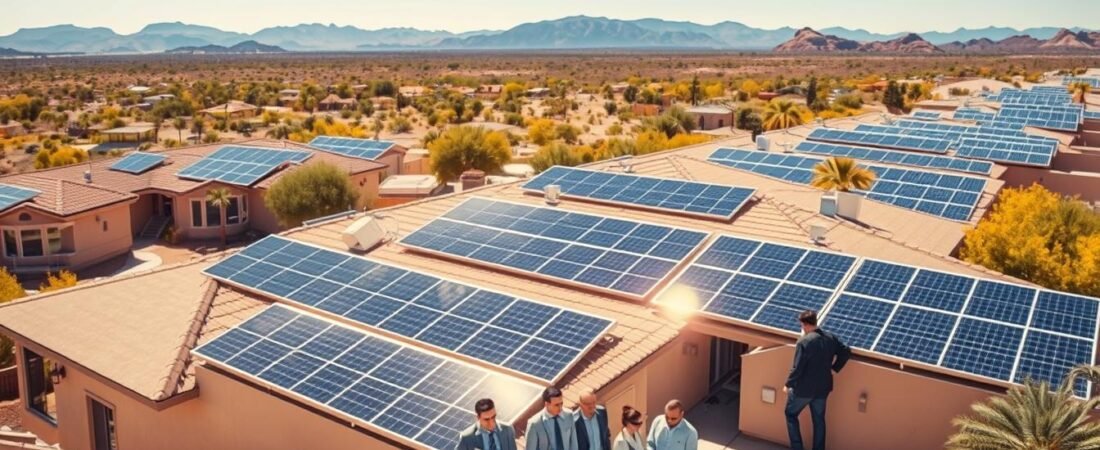
Solar Topps has led residential energy solutions since 2009. Our team builds tailored systems that match each home’s needs and deliver lasting savings.
Choosing the right partner makes a big difference in system performance and long-term cost. We manage the entire installation process in-house so quality stays high and turnaround is faster.
From design and engineering to final activation, we take full ownership of every job. That means clear communication, fewer delays, and measurable results for your project.
Want to learn about our services or start a quote today? Visit our residential services page to see how our experience and solutions can work for your home.
Why Arizona Homeowners Are Switching to Solar
Long, bright days are pushing more residents to adopt clean, local energy solutions today. With more than 300 sun-filled days each year, many people see a clear chance to lower bills and gain energy independence.
When you experience solar power firsthand, your system can produce enough electricity to run appliances during peak daylight. That immediate payoff makes the transition feel practical and rewarding.
Businesses follow suit with commercial solar installations, which proves clean power works for larger properties as well. High-efficiency solar panels capture abundant sunlight and turn a roof into a productive, money-saving asset.
Modern energy systems also focus on future readiness. A well-designed setup protects your home from grid instability and unpredictable utility rate hikes for years to come.
Evaluating Top Arizona Solar Panel Companies
Finding a trusted installer starts with checking credentials and the track record of their team. A quick review of certifications and customer feedback reveals how well a company handles each installation and system design.
Industry Certifications
Look for NABCEP accreditation and manufacturer credentials. These prove that the crew follows safety standards and sound engineering practices.
Solar Topps earned the 2026 EnergySage Local Installer of the Year award, which validates our focus on quality engineering and strong results.
Customer Reputation
Read a recent review to judge reliability and service. A clear reputation tells you how the company handled past jobs and whether customers got a great experience.
- Commercial Solar Arizona brings over 100 years of combined team experience to commercial solar projects.
- A reputable installer will offer high-quality panels and transparent services for long-term performance.
“Awards and strong reviews are the quickest signs that a provider delivers on promises.”
For a broader list of top installers, see our roundup of the best installers in AZ.
Understanding the Solar Installation Process
A transparent installation timeline gives homeowners confidence and keeps every job on track.
The process starts with a professional site inspection to assess roof condition and your energy needs. This inspection guides system design so the setup fits your home and usage patterns.
Our engineering team manages the full project, including permitting and utility coordination. The Edlund + DuPont McCord family had a 90-panel system up and running in under two months, which shows how coordinated installations move fast.
A professional company handles permits, scheduling, and final inspection for the customer. When you experience solar power, you see how a well-planned installation can deliver consistent energy for many years.
Every job is executed with precision so the panels mount securely and the entire system meets local building and safety codes. Clear communication from the team keeps the project on schedule and aligned with your needs.
Maximizing Savings with State and Federal Incentives
Smart use of state and federal incentives can cut your upfront costs and speed your payback. These programs work together to make a home or commercial project more affordable.
Federal Tax Credits
The 30% federal tax credit remains a primary tool to lower the total cost of your system. It directly reduces the tax you owe and applies to most residential and commercial installations.
Example: The Singh family used the credit and saw annual energy bills fall from $7,000–$8,000 to $600–$700 after their installation.
Net Billing Programs
Net billing lets you earn value for excess energy your system sends back to the utility. Rules and rates vary, so our team helps you choose the best options and timing during the process.
Property Tax Exemptions
Many local programs offer property tax exemptions for energy equipment. That keeps your property tax from rising even when your system raises home value.
| Incentive | Benefit | Who Qualifies | Example Impact |
|---|---|---|---|
| Federal Tax Credit (30%) | Reduces federal tax liability | Most homeowners & businesses | Lower upfront cost; faster payback |
| Net Billing | Credit for exported energy | Customers on eligible utility tariffs | Higher monthly savings on bills |
| Property Tax Exemption | Prevents higher property taxes | Owner-occupied and commercial | Reduced long-term ownership costs |
| Combined Strategy | Stacked savings | All eligible projects | Significant total cost reduction |
Next step: Talk with a knowledgeable company to map incentives to your project and lock in the best savings today.
The Benefits of Adding Battery Storage Systems
Home battery systems turn midday excess into reliable power when you need it most.
Store energy for lower bills and peace of mind. A battery lets you save extra energy and use it during peak utility pricing or an outage. That simple shift can cut monthly costs and protect essential circuits.
We stock the Tesla Powerwall 3 and expansion packs to provide resilient backup power. These high-quality systems keep refrigerators, medical devices, and basic lighting running during grid failures.
A battery-only installation is a smart path if you are not ready to install panels on your property today. It gives the home greater independence and immediate protection from rising energy costs.
- Store low-cost electricity for use during peak rates.
- Reliable backup power during outages.
- Seamless integration with your existing home setup for long-term performance.
“A properly integrated battery system reduces bills and improves home resiliency.”
Our team manages the installation process and ensures quality integration so the system performs as promised for years to come.
Key Factors to Consider Before Hiring an Installer
Before you sign a contract, verify the installer can match your home’s needs and deliver clear project milestones. A short vetting process will save time and reduce unexpected cost.
Experience and Licensing
Check years of experience and confirm contractor and electrician licenses. Licensed crews reduce safety risk during installation and ensure the project meets code.
Ask for a detailed assessment that explains system sizing, engineering needs, and a step-by-step installation process. This helps you compare quotes and choose the best solutions for your property.
- Read online reviews to judge reputation and customer service.
- Confirm the team offers inspection and long-term maintenance services.
- Look for installers with commercial solar and residential job portfolios.
| Factor | Why It Matters | What to Ask |
|---|---|---|
| Licensing | Safety and code compliance | Provide license numbers and proof |
| Experience | Fewer delays; better engineering | Years in industry and past projects |
| Services | Complete support from design to maintenance | List of services, warranty, inspection options |
“A proven team protects your investment and keeps the installation on schedule.”
Comparing Quotes and System Performance Estimates
Compare quotes by focusing first on projected energy output, not just the headline price. A clear estimate of yearly production shows how a system will offset your bills over time.
Ask each company for a full cost-per-watt breakdown. In our market the range typically falls between $2.11 and $3.17 per watt. A professional quote also lists the installation process, expected savings, and any federal tax credit details.
Get at least three bids to compare equipment quality and projected production. Check that the proposed system size matches your current and future home energy needs.
- Verify assumptions: panel orientation, shading, and yearly output estimates.
- Confirm costs: total price, incentives, and warranties.
“Transparent estimates based on real data and years of experience produce reliable results.”
Carefully review every line item so the chosen installer is committed to long-term performance and real savings for your project.
Ensuring Long-Term Reliability and Warranty Support
A strong warranty and routine care keep your system productive and protect your investment.
Choose a company that offers a comprehensive workmanship warranty of 25 years or more. A long warranty shows confidence in installation and the quality of parts used.
Regular inspection and maintenance help panels and batteries keep producing energy at peak levels. Schedule checks every 1–2 years to catch wear, wiring issues, or soiling early.
Our team provides ongoing support so customers report a great experience and lasting results. Clear service steps after the job include documented inspections, firmware updates, and warranty claims handling.
- Workmanship warranty: 25+ years protects the installation.
- Routine inspection: scheduled checks preserve performance.
- Dedicated support: a responsive team ensures peace of mind.
“Choosing an installer that stands behind their work protects your long-term energy savings.”
Check reviews and reputation in the industry before signing. A reliable provider will explain how credits, inspections, and maintenance tie into long-term quality and energy results for your home.
Conclusion
A thoughtful system plan turns rooftop potential into steady monthly savings and greater independence. Choosing the right path makes your investment practical and long lasting.
Trust a licensed team to deliver careful installation and strong, reliable workmanship so your system performs as promised. Proper setup and maintenance keep energy production high and protect your home value.
Start your journey today with a consultation to estimate savings and timeline. Our guide aims to help you pick the best solution, and we thank you for considering this resource to power your home in Arizona with clean solar energy and durable panels for years to come.